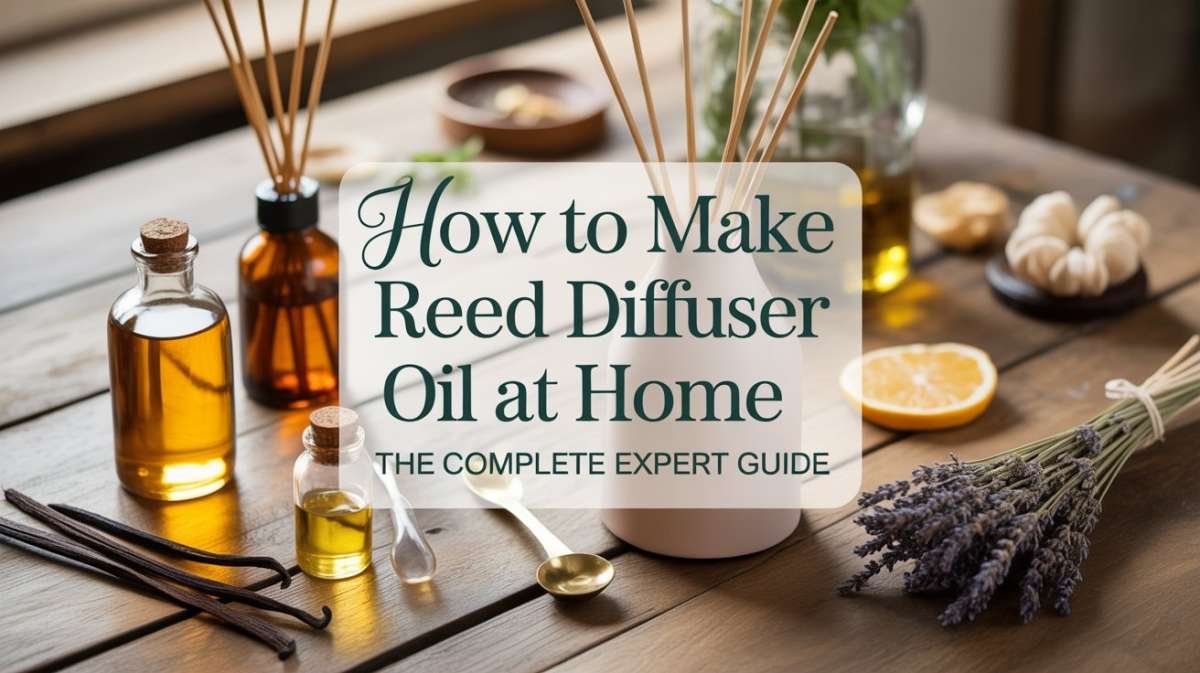
You walk into a beautifully scented room and immediately feel at ease. That quiet continuous fragrance filling the air without a candle flame or a plug socket that is what a reed diffuser does. And once you know how to make reed diffuser oil yourself you will never pay retail price for one again.
The truth is making your own reed diffuser oil is one of the simplest DIY projects you can do at home. It takes about five minutes, costs a fraction of what store-bought diffusers charge, and gives you complete control over the scent, the strength, and the ingredients going into your living space.
This guide covers everything from how they actually work to the exact ratios, the best carrier oils, fragrance blends that genuinely perform, and how to troubleshoot when things go wrong.
What Is a Reed Diffuser and How Does It Work?
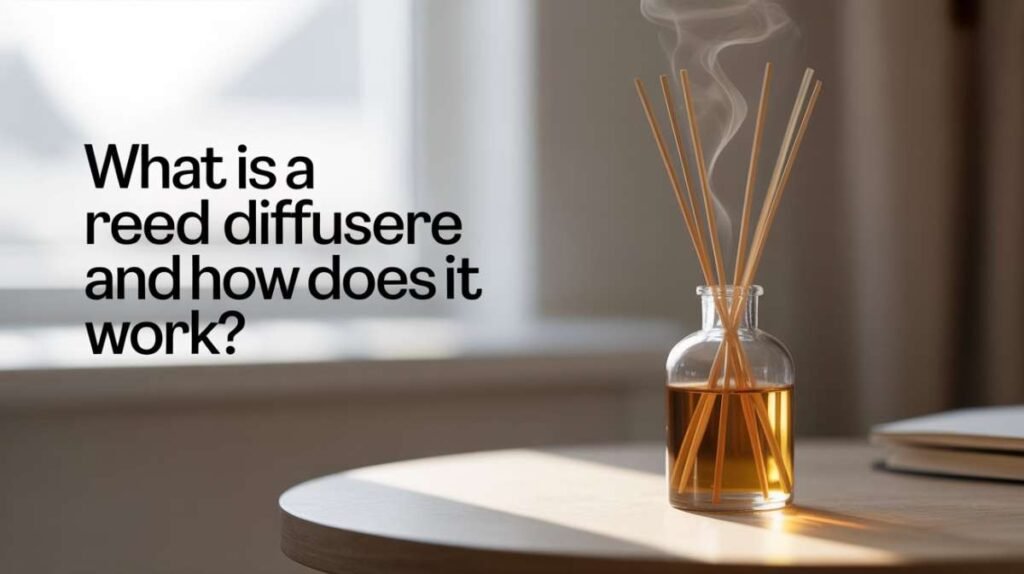
A reed diffuser works through capillary action. The porous reeds draw the fragrance solution upward through their internal channels and release the scent as the liquid evaporates at the top. No heat, no electricity, no supervision needed. Just continuous gentle fragrance dispersed naturally into the room.
Rattan reeds are the gold standard because they have clearly defined internal channels that pull liquid upward efficiently. Bamboo skewers work as a budget alternative but are less porous and perform noticeably less well over time. The bottle shape matters too. A narrow-necked glass container slows evaporation so your diffuser lasts longer. Wide-mouthed containers burn through your blend in days and give you an overwhelming hit of fragrance at the start followed by nothing. Narrow neck, always.
What You Need to Make Reed Diffuser Oil
The shopping list is short and most of these are available online, at craft stores, or at pharmacies.
- A narrow-necked glass bottle or vase. Glass only and never plastic as essential oils react with plastic. Aim for a 4 to 6 oz bottle with an opening of roughly 1 to 2 inches.
- Rattan reed sticks. Available cheaply online. For a 4 oz bottle, 5 to 8 reeds is a good starting point. More reeds means stronger scent.
- A light carrier oil. This is your base and the most important ingredient after your fragrance. More on which oils to choose below.
- Essential oils or fragrance oils. Or a combination of both. Essential oils offer aromatherapy benefits. Fragrance oils throw scent more powerfully and last longer.
- High-proof alcohol. Perfumers alcohol is ideal. Vodka works well as a practical alternative.It makes the carrier oil thinner and helps the scent move through the reeds more easily.
- A small funnel. Optional but makes pouring into a narrow neck significantly less messy.
Best Carrier Oils for Reed Diffusers
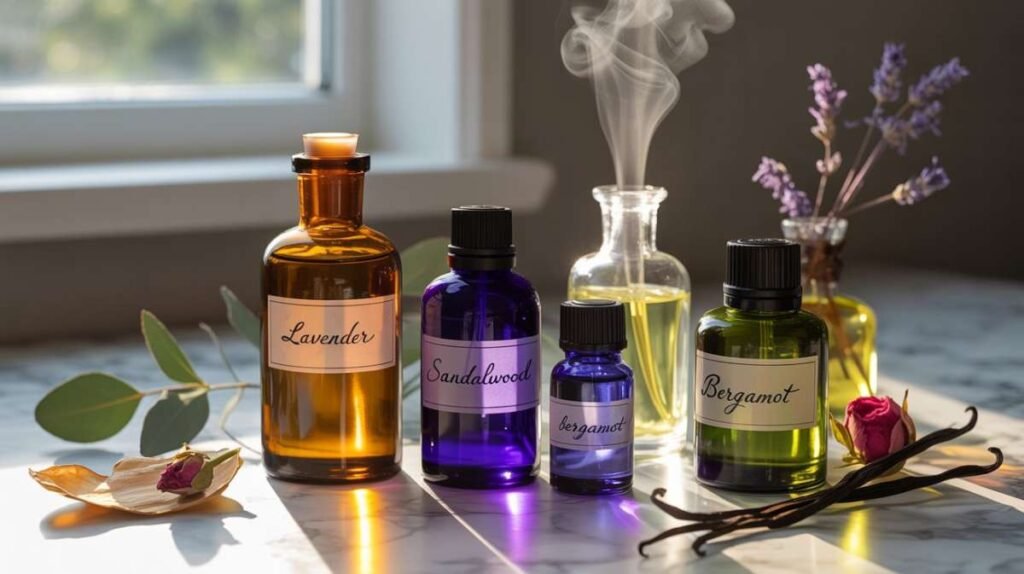
This is where most people go wrong. The carrier oil must be thin enough to travel up the rattan reeds through capillary action. Thick oils cannot make that journey efficiently and the result is a diffuser that barely smells of anything.
Oils That Work Well
- Fractionated coconut oil (MCT oil) the best all-round choice. Light, clear, virtually no scent of its own, and a long shelf life. Wicks up reeds beautifully.
- Sweet almond oil slightly thicker than fractionated coconut oil but still light enough. Works best with a small splash of vodka to thin it slightly.
- Safflower oil very light, almost completely neutral in scent, and excellent for wicking. One of the closest natural oils to a professional reed diffuser base.
- Sunflower oil light, affordable, widely available, and low-scented. A solid budget option with a shelf life of around 12 months.
- Grapeseed oil light and thin with almost no fragrance of its own. Works well and is readily available from most health food stores.
Oils to Avoid
- Olive oil too thick and has a strong scent that competes with your fragrance blend.
- Standard coconut oil too viscous for effective wicking. Do not confuse it with fractionated coconut oil which is a completely different product.
- Jojoba oil technically a wax rather than an oil. Too thick for reed diffusers and clogs the reeds quickly.
- Avocado oil too heavy and has a distinctive scent that competes with your fragrance oils.
Never add water to your reed diffuser blend. Water and oil do not mix, the fragrance will not diffuse, and the reeds can develop mould inside the bottle. Always use oil or alcohol as your base.
The Reed Diffuser Oil Ratio
Getting the ratio right is what separates a diffuser that genuinely scents a room from one that barely registers. Here are the tested formulas that work.
| Formula | Carrier Oil | Alcohol | Fragrance Oil | Best For |
| Standard blend | 70% | 15% | 15% | Most rooms, balanced scent |
| Strong throw | 60% | 10% | 30% | Large or open-plan spaces |
| Subtle blend | 80% | 5% | 15% | Bedrooms, small spaces |
| No alcohol blend | 75% | 0% | 25% | Slower release, longer lasting |
For a standard 4 oz bottle, the 70 percent carrier, 15 percent alcohol, 15 percent fragrance formula is the sweet spot for most rooms and most fragrance types. That works out to roughly 2 oz carrier oil, half an oz of alcohol, and half an oz of fragrance.
How to Make Reed Diffuser Oil Step by Step
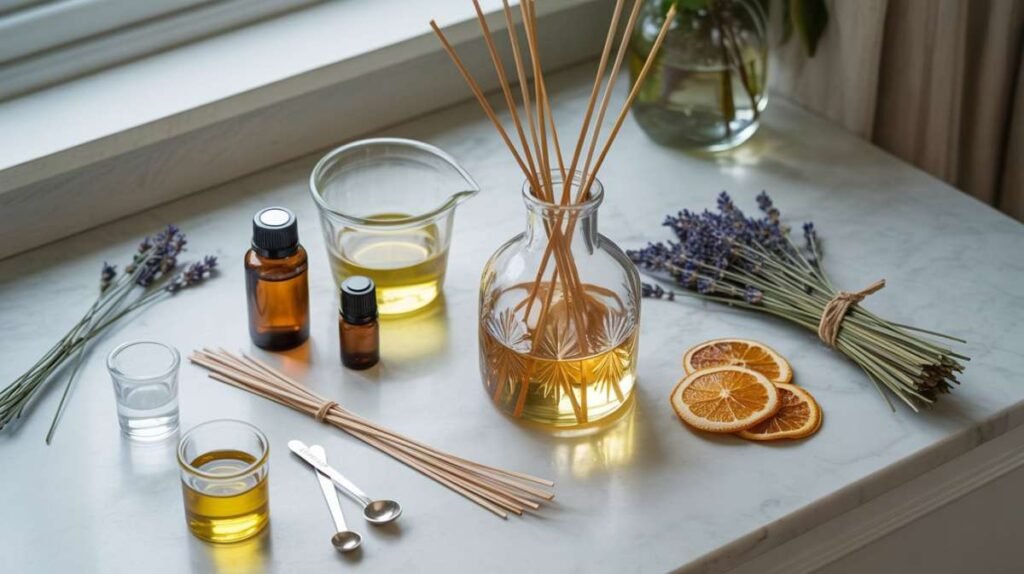
This takes about five minutes from start to finish. Cover your surface first because essential oils can damage wood finishes.
- Measure out your carrier oil into a small jug or measuring cup.
- Add the alcohol and stir gently until fully combined. Take your time here or they can separate later in the bottle.
- Add your essential oils or fragrance oils and stir again slowly and thoroughly.
- Using a small funnel, pour the blend into your glass bottle. Fill to about halfway and do not fill it to the brim as the reeds need room.
- Place your rattan reeds into the bottle and allow them to sit for about an hour to saturate fully.
- After an hour, flip the reeds so the saturated ends are pointing upward. This gives you an immediate burst of scent and confirms everything is wicking correctly.
- Place the diffuser somewhere with light airflow. A hallway or windowsill works well. Airflow helps carry the scent through the room.
Flip your reeds once a week for consistent scent throw. The exposed tops dry out over time. Flipping them re-saturates the dry ends and gives you a noticeable boost in fragrance without adding any new oil.
Reed Diffuser Base What the Professionals Actually Use
If you have ever wondered why a high-end commercial reed diffuser throws scent so much more powerfully than most DIY versions the answer is usually the base. Professional fragrance manufacturers typically use Dipropylene Glycol (DPG) or a product called Augeo Clean Multi rather than standard carrier oils.
DPG is a synthetic colourless low-odour solvent designed specifically to carry fragrance in reed diffusers. It has a lower viscosity than most carrier oils which means it wicks up rattan reeds more efficiently and produces a stronger more consistent scent throw over a longer period. Augeo Clean Multi is a glycerin-derived eco-solvent that performs similarly but with better environmental credentials. Independent testing suggests it forms the base of many premium diffuser brands.
Both are available from soap making suppliers online. For professional-quality results at home, switching to DPG or Augeo is one of the best upgrades you can make.
Which Fragrance and Essential Oils Work Best?
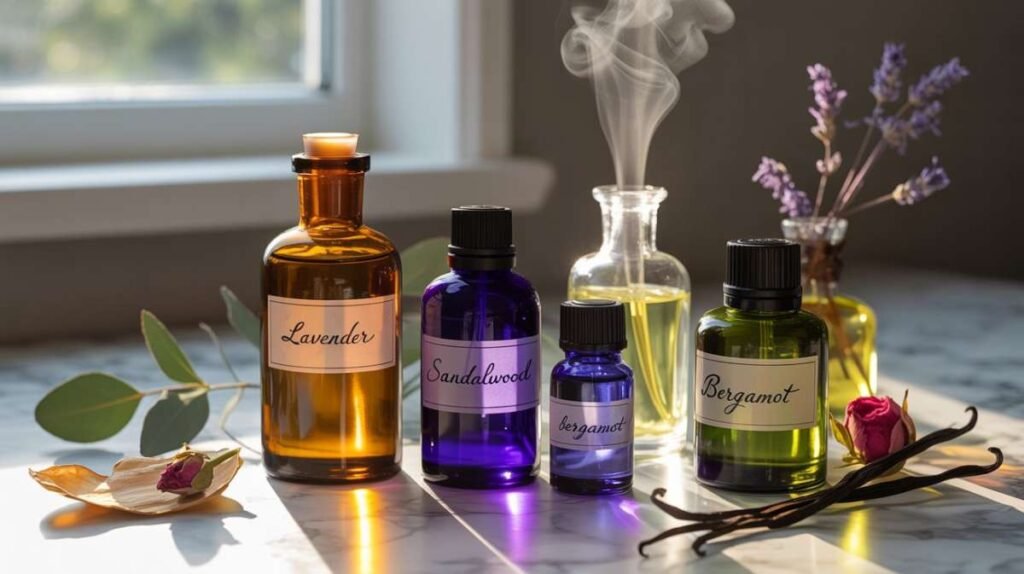
Not all oils perform equally in a reed diffuser. It comes down to evaporation rate and note structure. Top notes like citrus oils give you that bright immediate hit but fade quickly.
Base notes like cedarwood, sandalwood, and vanilla evaporate slowly and anchor the blend for weeks. The most effective reed diffuser blends combine all three levels a citrus or floral top note for brightness, a middle note like lavender for body, and a base note to extend the life of the scent.
Fragrance Blends Worth Trying
- Fresh and clean eucalyptus, peppermint, and lemon. Works beautifully in bathrooms and kitchens.
- Warm and cosy cinnamon, clove, and orange. The classic combination that makes any living room feel instantly welcoming.
- Calm and sleep-inducing lavender, cedarwood, and chamomile. Ideal for bedrooms with a slow-release fractionated coconut oil base.
- Sophisticated and woody sandalwood, bergamot, and rose. Perfect for formal living rooms and dining spaces.
- Tropical and bright mango, coconut, and lemon. Mood-lifting and works particularly well in summer.
How Much Fragrance Oil to Use
The most common mistake is being too conservative. Reed diffusers rely on evaporation which naturally dilutes scent over time. Going too light on fragrance means a diffuser that smells fine up close but has no real room presence. Use 15 to 30 percent fragrance oil relative to your total blend volume.
Start at 15 percent, assess after 24 hours, and increase on your next batch if the throw is too weak. Fragrance oils are generally more potent than essential oils in a reed diffuser so if using pure essential oils start at 20 to 25 percent to get comparable performance.
Can I Make a Reed Diffuser With Fragrance Oils?

Yes and in many ways fragrance oils are the better choice for reed diffusers specifically. They are formulated to carry and throw scent, hold their character as they evaporate, and last significantly longer than most essential oils alone.
The best approach is a combination. Use fragrance oils as your primary scent driver for throw and longevity then add specific essential oils on top for any therapeutic benefits you want.
What Can I Refill My Reed Diffuser With?
Make a fresh batch of your original blend and top up the bottle. This is also a good time to replace the reeds entirely. Old reeds accumulate dust and dried oil residue in their channels which progressively blocks the wicking action.
Reeds that have gone dark and are producing little to no scent should always be replaced rather than just flipped. If you want to change the fragrance completely wash the bottle thoroughly with hot soapy water, rinse well, and allow it to dry completely before adding a new blend.
Benefits of Reed Diffusers
- No heat or electricity required. Works entirely through natural evaporation. No fire risk and no electricity cost.
- Continuous consistent fragrance. Rather than the on-off cycle of candles or plug-ins, reed diffusers provide gentle uninterrupted scent 24 hours a day.
- Completely customisable. You control the fragrance, the intensity, the carrier oil, and the blend.
- Cost-effective. A homemade reed diffuser costs a fraction of retail equivalents. Once you have your carrier oil and fragrance you can make multiple diffusers for the cost of one store-bought one.
- Aromatherapy benefits. When made with genuine essential oils a reed diffuser delivers mild but real aromatherapy benefits continuously supporting sleep, focus, or relaxation depending on the oils used.
Are Diffusers OK for Asthma?

Reed diffusers disperse fragrance passively and at much lower concentrations than ultrasonic or nebulising diffusers. For most people this is fine. However for asthma sufferers certain essential oils and fragrance compounds can act as triggers particularly strong eucalyptus, peppermint, and some synthetic fragrance chemicals.
If you or someone in your household has asthma start with a very light blend, ensure the room is well ventilated, and pay attention to whether any respiratory symptoms change. Always consult a doctor if you are unsure about specific essential oils and a respiratory condition.
Troubleshooting When Your Reed Diffuser Is Not Working
No Scent at All
Flip the reeds first. This is the most common fix. If that does not help check whether your carrier oil is too thick and add a teaspoon of vodka to thin it. If you have been using the same reeds for more than a month replace them entirely as they are likely fully clogged.
Scent Fades Too Quickly
You need either more fragrance oil in your blend or more reeds in the bottle. Also check where the diffuser is placed. A spot near a direct draft causes the solution to evaporate too rapidly. Move it somewhere with moderate airflow rather than a direct vent or window.
Reeds Look Dark and Clogged
This is normal after a few weeks of use. Dust settles on the tops and combines with dried oil to block the wicking channels. Replace the reeds with a fresh set and your diffuser will perform like new again.
Final Thoughts
Making your own reed diffuser oil is one of those skills that once you have it you wonder why you spent years buying the overpriced retail versions. Five minutes, a handful of ingredients, and complete control over what goes into your home and how it smells.
Start with the standard 70 percent carrier, 15 percent alcohol, 15 percent fragrance formula. Use fractionated coconut oil as your base. Pick a scent combination you love and make a small test batch before committing to a full bottle.
Flip the reeds weekly and replace them monthly. And if you want to go properly professional try a DPG or Augeo base and see the difference it makes firsthand.
Your home deserves to smell as good as those expensive boutique diffusers. Now you know exactly how to make that happen for a fraction of the cost.
FAQ
What are the ingredients in reed diffuser oil?
Reed diffuser oil contains three main ingredients: a light carrier oil, alcohol, and fragrance oils or essential oils.
What can I refill my reed diffuser with?
You can refill your diffuser with a fresh blend using the same oil ratio. It is also best to replace the reeds at the same time.
Are reed diffusers safe for people with asthma?
Reed diffusers are usually gentler than electric diffusers, but some strong essential oils may trigger sensitivity in certain people.
How long can a homemade reed diffuser last?
A homemade 4 oz reed diffuser usually lasts between 4 and 8 weeks depending on the reeds, oil, and room temperature.
Can fragrance oil be used instead of essential oil?
Yes, fragrance oils work very well in reed diffusers and often provide a stronger and longer-lasting scent.

Leo Brooks is an expert in botanical oils and aromatherapy. He focuses on the healing power of scents, guiding you through the intricate process of blending essential oils for wellness, relaxation, and a balanced lifestyle.